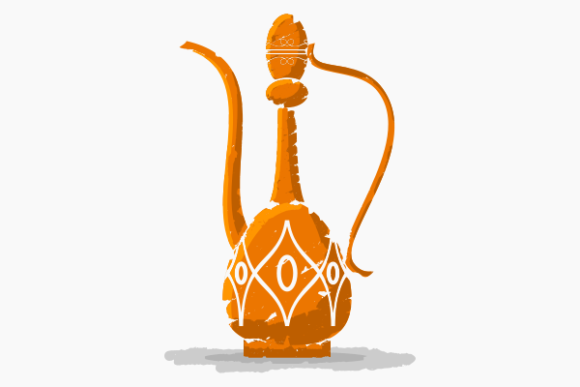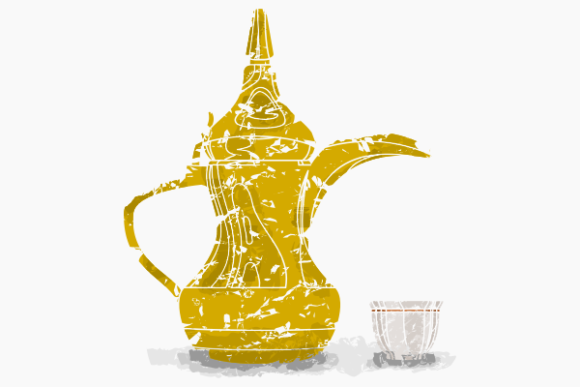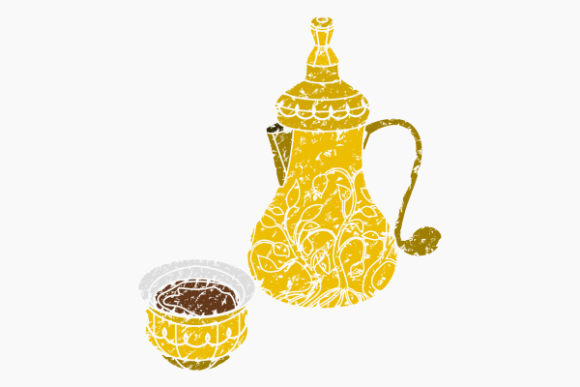
Brush Stroke Bulbous Arab Coffee and Cup
As someone who’s digitized, stitched, and sold hundreds of embroidery designs—from delicate florals to bold typography—I opened Brush Stroke Bulbous Arab Coffee and Cup expecting charm, but not quite this much character. It’s a single, cohesive illustration: a traditional dallah pot with a bulbous base, paired with a finjan cup, both rendered in expressive, painterly brush strokes—not rigid outlines or flat vector silhouettes. The patterned texture on the dallah’s lower half adds subtle rhythm without clutter, and the coffee surface suggests warmth, not literal liquid. This isn’t just decoration; it’s storytelling in stroke form.
Last week, I used it as the centerpiece for a custom embroidered linen kitchen towel—meant for a small-batch café pop-up. No text, no border, just the design centered at 3.2 inches tall. The result? Instant recognition, quiet elegance, and zero visual fatigue. Customers paused, smiled, and asked, “Is that hand-painted?” That’s the power of intentional brushwork in an embroidery file—it reads handmade, even when machine-stitched.
Where it shines most: apparel and home goods with cultural resonance or artisanal positioning. Think sweatshirt embroidery for a Middle Eastern bakery, embroidered patches for barista aprons, baby onesies with soft-toned thread (ivory on oatmeal cotton), or pillow covers for a boutique hotel lobby. Its fluid lines translate beautifully into satin stitch for the pot’s curves and gentle fill stitch for the patterned base—no harsh edges to snag or distort. Because it’s built as an Editable SVG vector, you can scale it cleanly for a tiny cap front (under 2.5”) or expand it for a tote bag panel—no pixelation, no redraw needed.
It’s also a smart fit for Decorative Elements in digital product bundles: think printable mockups for Etsy sellers showcasing café branding, or layered design assets for craft business owners building cohesive social media kits. As a Graphics asset, it bridges print and stitch—same file, different context. That flexibility saves time when you’re juggling client revisions across embroidery, web, and packaging.
Where to pause—and test: this design breathes best on stable, medium-weight fabrics. On thin cotton tees or stretchy jersey, the brush stroke energy risks blurring if stabilizer isn’t matched precisely. I recommend tear-away + light cutaway combo for knits, and always test on scrap first—especially where the finjan handle meets the cup rim. Those fine, tapered ends are elegant on screen but demand clean needle control and moderate stitch density. Too dense, and the brush feel turns stiff; too sparse, and the gesture disappears.
Dark fabric? Yes—but choose matte, low-sheen thread (like polyester matte or rayon) to preserve the softness of the strokes. Glossy thread overpowers the subtlety. And avoid pairing it with heavy decorative accents (e.g., beading or metallics) unless you’re intentionally going luxe—this design earns attention through restraint, not embellishment.
Real impact on your finished product: it lifts perceived value instantly. A plain black tote becomes a collectible item. A generic baby bib feels culturally grounded and thoughtfully designed. Customers don’t just see “coffee”—they sense heritage, craft, and care. That builds trust, especially for Etsy sellers or small shop owners whose brand hinges on authenticity. It also photographs well across lighting conditions, which matters for digital listings and social proof.
For holiday embroidery or personalized gifts, it works quietly but meaningfully—no loud sentiment, just warmth and tradition. A wedding gift for a couple who met at a café? Embroidered on a tea towel with their initials subtly tucked into the dallah’s pattern. A Ramadan gift? Paired with a simple crescent motif in matching thread. Its versatility is in its mood, not its modularity.
Practical embroidery designer notes:
- Always run a test stitch on fabric identical to your final project—brush strokes reveal tension issues faster than geometric shapes.
- Review stitch density before digitizing further: the patterned base should read as texture, not noise. If your software shows >12,000 stitches for the full layout, simplify minor fills.
- Confirm hoop size compatibility early—while scalable, the natural proportions favor 4”–5” hoops for optimal flow. Avoid cramming it into a 3” hoop unless you’re willing to lose stroke nuance.
- Check how it renders in black-and-white mockups. Does the contrast hold? Does the finjan still read as distinct from the pot? If not, adjust underlay or reduce overlap in your digitizing software.
- Use proper stabilizer—especially for textured fabrics like terry cloth or linen blends. The strokes need a firm foundation to land crisply.
- Verify licensing before selling finished items or bundling as digital embroidery files. Since it’s described for “web or printed product of cafe wit,” confirm commercial embroidery rights directly with the source if reselling stitched goods.
This isn’t a trend-chasing graphic. Brush Stroke Bulbous Arab Coffee and Cup is a considered, culturally resonant piece—one that supports your voice as a maker rather than drowning it in decoration. It invites slowing down: in stitching, in gifting, in branding. Whether you’re prepping for a craft fair, launching a café line, or creating heirloom baby embroidery, it holds space for intention—not just application.
If your next embroidery project needs warmth without cliché, clarity without rigidity, and cultural depth without appropriation, this design earns its place in your working library. Just remember: let the brush strokes lead, not your timeline. Test. Tweak. Trust the gesture.