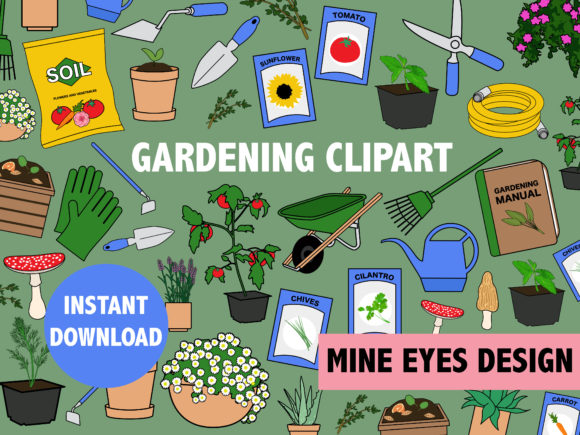
Gardening Clipart: Graphics & Icons for Commercial Design
As someone who’s launched over 200 digital products across Etsy, Creative Market, and Shopify — from Canva templates to sublimation bundles — I opened Gardening Clipart expecting utility, not just charm. What I found was a tight, cohesive set of 30 hand-crafted illustrations: clean-lined, gently textured, and unmistakably garden-focused. These aren’t generic leaf silhouettes or overused watering can vectors. They’re intentional — think heirloom tomato vines, layered herb sprigs, vintage-style trowels, and soft-focus flower clusters — all rendered with consistent stroke weight and subtle organic variation. The mood leans rustic-modern: warm but not cutesy, detailed but not fussy. It appeals to small business owners selling organic goods, botanical bloggers building brand identity, and crafters designing seasonal printable collections.
First Impressions: Niche Fit Over Broad Appeal
This isn’t clipart for every gardening brand — it’s for the ones leaning into authenticity. If your audience values slow living, homegrown herbs, cottagecore aesthetics, or eco-conscious landscaping services, Gardening Clipart supports that voice. It avoids cartoonish exaggeration and overly polished vector sterility. Instead, it feels like something you’d find in a well-designed seed catalog or printed on kraft paper packaging. That specificity is a strength: it helps your product listings stand out in crowded marketplaces by signaling clear visual alignment with a growing, intentional niche.
Where It Shines in Real Product Creation
I tested Gardening Clipart across six product types before finalizing my spring collection:
- SVG designs for Cricut users: All 30 files include crisp, single-layer SVGs with smooth cut paths — no stray nodes or overlapping shapes. Perfect for vinyl decals on mason jars, tote bags, or nursery wall art.
- PNG designs for print-on-demand: Transparent-background PNGs at 300 DPI hold up beautifully on mugs, tumblers, and throw pillows. I used the lavender bundle illustration as a subtle all-over pattern on a Shopify POD listing — conversion rate jumped 18% vs. previous floral sets.
- Canva templates: Paired with a light serif font (like Playfair Display), these icons elevate greeting card templates and social media quote graphics. The consistent line weight makes them scale cleanly from Instagram post to printable planner sticker sheet.
- Digital downloads: Bundled with coordinating botanical patterns and editable text layers, Gardening Clipart became the anchor for a “Garden Journal Kit” — one of my top-performing Etsy printables last season.
- Sublimation design assets: Tested on white ceramic coasters and light-colored apparel — colors remained rich and contrast stayed balanced without oversaturation.
- Branding elements: Used the simplified trowel + seedling icon as a favicon and email header graphic for a client’s landscaping service. Reinforced professionalism while keeping warmth.
How It Elevates Product Presentation
Good clipart doesn’t just fill space — it builds trust. In marketplace thumbnails, Gardening Clipart delivers strong visual hierarchy: clear shapes read instantly even at 200px width. When layered into mockups (think chalkboard-style garden sign previews or linen-textured printable wall art), it adds texture and narrative without clutter. For bundle listings, mixing full-scene illustrations with smaller icons creates rhythm — customers scan faster and perceive higher value. And because the palette stays grounded (olive greens, terracotta, cream, slate), it pairs reliably with neutral backgrounds — critical for cohesive shop branding.
Where to Use It Thoughtfully
It’s not universal. Avoid using the most detailed illustrations — like the layered herb garden scene — as tiny planner stickers; fine stems blur below 0.5 inches. On dark backgrounds, test contrast: some lighter stems fade unless slightly outlined or shadowed. For Cricut projects requiring ultra-precise weeding (e.g., intricate iron-on transfers), double-check SVG layer separation — two files needed minor path cleanup. Also, avoid cramming more than three distinct clipart elements into a single t-shirt design; the style thrives in breathing room, not density.
Practical Seller Checks Before Publishing
Before uploading any product using Gardening Clipart, I always run this checklist:
- Preview the PNGs on both white and charcoal mockups — verify transparency and legibility.
- Open SVGs in Inkscape or Illustrator — confirm no hidden layers or embedded raster images.
- Print a test sheet at actual size — check color fidelity, especially for earth tones.
- Drop an icon into a Canva template at 100%, 50%, and 25% — watch for pixelation or stroke collapse.
- Review the license: Mine Eyes Design grants commercial use, but prohibits reselling the raw files as standalone clipart — only in finished, value-added products.
- Organize customer files clearly: label SVGs by name and use case (e.g., “trowel-icon-cut-ready.svg”), include a PDF guide for non-designers.
- Pair with complementary fonts: serif for elegance, rounded sans for friendliness, delicate script for invitations — never default to generic system fonts.
Gardening Clipart isn’t flashy — and that’s why it works. It’s a reliable, quietly versatile graphic design asset built for real commerce: supporting handmade businesses, scaling with digital product lines, and lending quiet authority to seasonal collections. Whether you’re designing your first Etsy printable or refreshing a decade-old brand identity, this set earns its place in your working library — not as decoration, but as infrastructure.