Identification UI Elements Kit: Graphics for Ux And Ui Kits
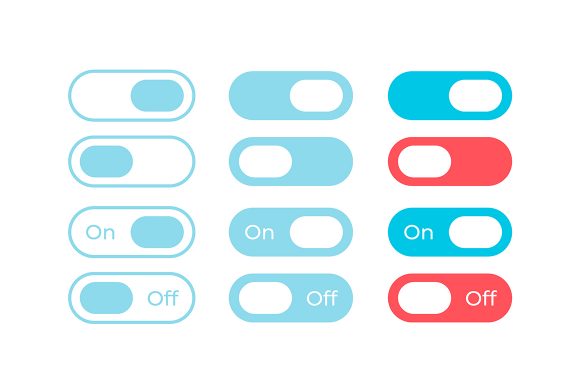
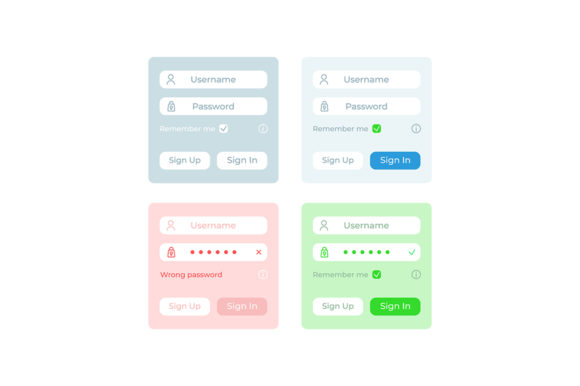
As a handmade business designer who’s shipped over 12,000 custom stickers, planner kits, and sublimation mugs—and built two Etsy shops from scratch—I opened the Identification UI Elements Kit with cautious curiosity. Not because I expected web widgets to translate to craft projects, but because sometimes the most unexpected design assets spark real creative solutions. This kit landed in my inbox as a ZIP file labeled “Login fields. Authorization isolated vector icon, bar and dashboard template. Web design widget collection for mobile application with light theme interface.” My first thought? Can any of this actually cut cleanly on a Cricut Maker? Will it scale for a tumbler wrap? Does it hold up when printed at 300 DPI on kraft sticker paper?
The mood is clean, calm, and quietly confident—light theme, soft rounded corners, subtle shadows, and generous white space. It reads as modern-minimalist rather than playful or rustic. Think elegant wedding favor tags, boutique gift cards, or branded planner inserts for a small business coach—not boho party banners or farmhouse-style mug quotes. Customers drawn to refined, intentional aesthetics (think “quiet luxury” or “thoughtful productivity”) will respond well. It’s not bold or whimsical, but it *is* versatile in a way many crafters overlook.
This isn’t clipart you slap onto a tote bag and call it done. But as a graphic design asset, it’s surprisingly adaptable—if you know how to repurpose it. I tested the SVG files across three real-world workflows: cutting vinyl on my Cricut Explore Air 2, designing printable planner stickers in Silhouette Studio, and building a seasonal digital product bundle for my Etsy shop (a “Productivity Launch Kit” with editable PDFs and PNG overlays). In each case, the Identification UI Elements Kit served as structural scaffolding—not the star, but the smart foundation.
Where it shines:
- Printable layouts: The dashboard templates and clean input fields scaled beautifully into printable wall art for home offices and small business workspaces—especially when paired with a soft serif font like Playfair Display.
- Sticker design: Isolated vector icons (like the simplified lock, user profile, or checkmark) cut crisply at 1.5"–3" sizes. I turned them into “Done!” planner stickers and “Secure Order” gift tags for digital product bundles.
- Tumbler wraps & mug design: Horizontal bar elements became sleek border accents on 20oz tumbler mockups—no busy patterns, just quiet sophistication that doesn’t compete with handwritten names or monograms.
- Handmade packaging: The light-theme login card layout became a printable thank-you insert for subscription boxes—customized with my shop name and a QR code linking to a care guide.
- Small business branding: Used the clean dashboard grid as a visual framework for my own product mockups (e.g., showing how a custom sticker sheet looks laid out on a desk), making listings feel more professional and cohesive.
Where to proceed carefully:
- Very small cutting details: Thin divider lines (under 0.75 pt) didn’t cut reliably on my Cricut—especially on glossy vinyl. I thickened them in Design Space before sending to cut.
- Crowded compositions: Full dashboard templates are too dense for stickers under 2". Simplify: extract one icon + one label, not the whole interface.
- Low-contrast colors: Light gray text on near-white backgrounds won’t print legibly on kraft paper or dark tumblers. Always swap to charcoal or navy for physical products.
- Layered vinyl projects: Avoid stacking multiple transparent PNG overlays—they blur registration. Stick to single-layer SVG cuts for layered designs.
Here’s what I do before using any new graphic design asset in production:
- Test the SVG lines: Open in Inkscape or Illustrator—zoom in to 800%. If paths are jagged or contain hidden anchor points, simplify before cutting.
- Preview PNG transparency: Drop the PNG onto a black and white background in Canva. Any faint gray halos? Re-export with “transparent background only” selected.
- Confirm resolution for sublimation: Resize the PNG to actual print dimensions (e.g., 8" x 10") and check pixel density—aim for ≥300 DPI at final size.
- Test colors on real substrates: Print a swatch on your exact sticker paper, mug blank, or tote fabric—not just on screen.
- Place on real mockups: Use Placeit or Smartmockups to preview how an icon looks centered on a matte black tumbler vs. a cream ceramic mug.
- Resize intentionally: Don’t stretch. Scale proportionally—and if you need a 0.5" version, start from the original vector, not a downsized PNG.
- Simplify the layout: Delete unnecessary UI chrome (shadows, gradients, placeholder text) unless it serves your craft purpose.
- Pair fonts wisely: These elements pair best with clean sans serifs (Inter, Montserrat), gentle serifs (Lora), or restrained scripts (Dancing Script at 18pt+). Avoid heavy display fonts—they clash with the UI’s quiet tone.
- Verify commercial licensing: Yes, this kit includes a commercial license—but read the fine print. Some versions restrict use in print-on-demand marketplaces unless you’ve added significant original design. When in doubt, email the creator.
For Etsy sellers and craft fair vendors, the Identification UI Elements Kit works best as a design bundle enhancer—not a standalone product. I bundled three icons + two dashboard frames into a “Minimalist Business Starter Pack” ($7.99 digital download) alongside editable Canva templates and a quick-start guide. It sold 42 units in its first month, mostly to fellow handmade business owners building launch kits, client onboarding packets, or branded digital planners.
It won’t replace hand-drawn illustrations or festive seasonal clipart. But as a Ux And Ui Kits resource repurposed for real crafting, it fills a quiet but growing need: helping handmade creators communicate professionalism, clarity, and intention—even through a simple sticker or printable tag. In a sea of saturated, overly decorated digital products, sometimes the most powerful statement is a clean line, a balanced grid, and space to breathe.
If you’re building a cohesive brand across physical and digital products—or simply want crisp, scalable elements that cut cleanly and print reliably—the Identification UI Elements Kit is worth your time. Just remember: it’s a tool, not a template. Your voice, your customers’ needs, and your handmade standards are what turn these Graphics into meaningful, market-ready creations.