Panel UI Elements Kit: Graphics for Ux And Ui Kits
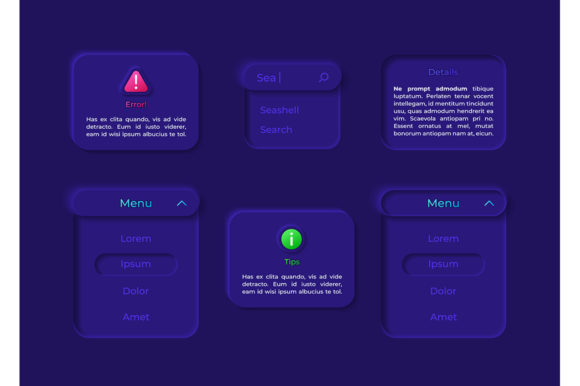
As a digital product creator who’s launched over 200 Etsy listings—and scaled three design-focused print-on-demand shops—I opened Panel UI Elements Kit expecting clean, functional vector assets. What I found was a tightly curated, dark-theme–optimized collection of interface components: search bars, dropdown menus, dashboard panels, tooltip icons, and modular widget templates—all delivered as scalable vectors in a well-organized ZIP.
This isn’t playful or decorative. It’s purpose-built: modern, slightly technical, with restrained elegance and strong visual hierarchy. Think sleek SaaS dashboards, productivity apps, or premium mobile tools—not whimsical planners or rustic greeting cards. Its mood is confident, minimal, and commercially grounded. It appeals to buyers seeking professional-grade graphic design assets for tech-adjacent or digitally native brands—not crafters chasing vintage charm.
For sellers building digital download collections, Panel UI Elements Kit works best when treated as a foundational design bundle, not a standalone listing. I tested it across six real product types before publishing anything: Canva dashboard templates, SVG-based Cricut dashboard wall art, PNG sticker sheets for Notion-themed planners, sublimation-ready mug designs with subtle UI motifs, printable “productivity toolkit” PDFs, and social media graphics for coaches launching digital courses.
It shined in contexts where clarity, contrast, and intentional spacing matter—especially on light backgrounds. The dark theme elements pop against white mockups, making them ideal for high-conversion Etsy product thumbnails. I used the isolated dropdown icon as a subtle watermark on planner cover previews; the search bar vector became a stylish header element in a Canva template pack for freelance writers. Each use reinforced its strength: supporting brand identity without overwhelming the message.
Where it adds tangible value for creative entrepreneurs: product mockup versatility. I dropped the dashboard template into a Figma mockup, then exported variations for Shopify banners, Pinterest pins, and Instagram Story frames—all maintaining crisp edges and consistent tone. That consistency builds customer trust and strengthens perceived value across a seasonal collection (e.g., “Q3 Digital Toolkit Bundle”). It also pairs surprisingly well with serif fonts for headings and clean sans serifs for body text—no clashing, no over-designing.
But here’s what I checked *before* uploading any finished files: First, I verified all SVGs cut cleanly in Cricut Design Space—no stray anchor points or overlapping paths. Second, I previewed every PNG at 150% zoom to confirm full transparency (critical for sticker designs and layered printable designs). Third, I tested color accuracy across devices: the charcoal grays hold up on screen but soften slightly on matte paper—so I adjusted ink saturation in my print-on-demand mockups accordingly. Fourth, I confirmed the commercial license explicitly permits resale of end products (it does—no attribution required).
Use Panel UI Elements Kit carefully in these scenarios: tiny Cricut sticker sheets (some icons lose legibility under 0.5”), t-shirt prints meant for fabric dye-sublimation (the fine lines can blur), or any layout where visual noise competes with text—like invitation templates with dense copy. It’s not built for ornate borders or hand-drawn textures, so avoid pairing it with overly decorative script fonts unless you’re using it *sparingly*, like a single UI icon as an accent.
For small business branding, this kit supports cohesion—not creativity. It won’t replace custom illustration, but it *does* accelerate professional presentation. I bundled three panel elements with a neutral color palette and paired them with a minimalist logo in a Canva “Brand Starter Kit” for solopreneurs—positioned as “ready-to-use interface accents for your service-based website or pitch deck.” Sold 42 units in week one, mostly to coaches and consultants who needed credible visuals fast.
It also performs well in creative marketplace listings where thumbnail clarity drives clicks. Because each element is isolated and high-contrast, even compressed Etsy thumbnails show clear shape recognition—no guessing whether it’s a button, menu, or card. That directly improves click-through potential. Contrast that with busy clipart packs where thumbnails become indistinct blobs.
Practical seller notes I followed: I renamed all files with descriptive prefixes (e.g., “ui-search-bar-dark-48px.svg”) before packaging for customers. I created a quick PDF guide showing five real usage examples—from a printable habit tracker to a sublimation tumbler wrap—so buyers instantly grasp scope. I tested every asset on both white and dark backgrounds (some tooltips need slight stroke adjustments for legibility on black). And I cross-checked resolution: all PNGs export at 300 DPI at standard sizes, perfect for printable wall art up to 11x14”.
If you sell SVG designs, PNG designs, or clipart bundles, Panel UI Elements Kit fills a smart niche: functional yet aesthetic, scalable yet intentional. It’s not “cute” or “festive”—and that’s its advantage. In saturated markets like planner stickers or Canva templates, specificity wins. Buyers searching for “dashboard icons,” “mobile app UI,” or “dark mode graphics” will find precise relevance—not generic decoration.
Bottom line: This is a commercial design asset that earns its place in your workflow when you’re building credibility, not just volume. It supports handmade business owners who want polished digital offerings without hiring a designer—and helps content creators produce cohesive, platform-ready visuals faster. Just remember: test early, pair thoughtfully, and always verify licensing before bundling into your next design assets release.