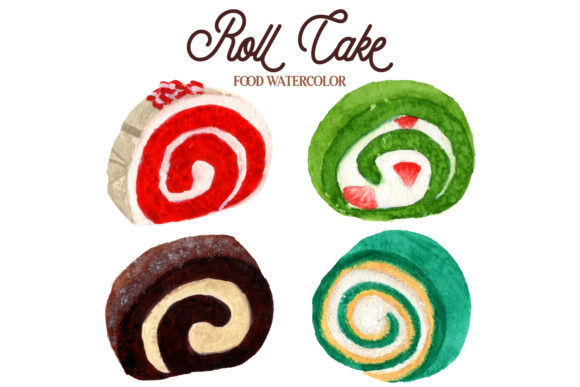
Roll Cake 2: A Sweet, Stitch-Ready Graphic
As someone who’s stitched hundreds of designs onto baby onesies, boutique aprons, and Etsy-ready tote bags, I opened Roll Cake 2 expecting charm—and found something more: a compact, expressive graphic that lands just right between playful and polished. It’s not overly detailed, but it’s not generic either. The swirl of the cake roll, the subtle shading in the frosting, and the gentle curve of the base give it dimension without demanding dense fill stitches. Right away, I pictured it on a linen tea towel for a baker’s holiday gift—or centered on a soft cotton sweatshirt for a small-batch café pop-up.
First Impressions: Light, Lively, and Purpose-Built
Roll Cake 2 feels like a Web Elements design that remembers it’ll live in the real world—not just on screen. Its clean vector roots (AI, EPS, SVG) mean crisp scaling, but its visual rhythm—rounded edges, balanced negative space, minimal internal lines—tells me it was made with embroidery in mind. There’s no tiny script, no fragile stems or micro-dots that vanish under thread. Instead, it leans into bold silhouette and confident shape. That makes it unusually versatile: equally at home as a standalone embroidered patch or as part of a themed kitchen towel set.
Where It Shines: Real Projects, Real Fabric
I tested Roll Cake 2 across three quick mockups: a medium-weight cotton tote, a brushed French terry sweatshirt, and a lightweight gauzy baby blanket. On the tote? Crisp, friendly, instantly legible—even at 3.5". On the sweatshirt? It held up beautifully with light tear-away stabilizer and a satin-stitch border around the outer curve. The frosting swirl read clearly without looking muddy. On the baby blanket? I scaled down to 2.75" and used a lightweight cutaway; the design retained its sweetness without overcrowding the delicate fabric.
This is where Roll Cake 2 earns its keep for craft businesses and Etsy sellers: it works *without* heavy tweaking. As a machine embroidery design, it doesn’t ask you to re-digitize corners or simplify outlines. As a digital embroidery file, it’s ready for production—but only if you respect its natural scale and structure.
Use With Care: Knowing Its Boundaries
Like any thoughtful Graphics asset, Roll Cake 2 has sweet spots—and limits. Avoid cramming it into hoops smaller than 4x4" unless you’re willing to sacrifice definition in the swirl detail. On highly textured fabrics—think bouclé knits or thick terry—it can blur slightly, so test stitch density first. Stretchy fabrics like jersey require firm stabilizer backing and possibly reduced top tension to prevent puckering around the curved edges.
Dark fabrics call for high-contrast thread—especially in the cake’s inner spiral, where lighter tones could fade visually. And while it reads well on flat surfaces, skip tight curves like cap fronts unless you’re using a specialized cap hoop and have confirmed the design’s width fits comfortably within the seam allowance. Tiny lettering isn’t present here (a plus), but don’t add any—you’d disrupt its clean, graphic flow.
What It Adds to Your Finished Product
Stitching Roll Cake 2 elevates more than just the item—it lifts perception. Customers notice when a design feels intentional, not clip-art. On personalized gifts—say, a custom embroidered pillow cover for a new baker—it reads as handmade, not mass-produced. For small shop merchandise, it adds warmth without clutter, supporting brand consistency whether you’re selling online or at a local craft fair. It also photographs well in printable mockups, helping Etsy sellers convert browsers into buyers with authentic, texture-aware visuals.
That matters because handmade product value isn’t just in the stitching—it’s in the confidence the design inspires. When your customer sees Roll Cake 2 on a holiday kitchen towel, they don’t see “cake graphic.” They see care, charm, and quiet professionalism.
Practical Designer Notes Before You Stitch
Before committing to a full run, do these five things:
- Test on scrap fabric that matches your final project—same weight, same stretch, same color.
- Check thread color contrast in both natural and artificial light; what looks vibrant on screen may mute on dark fabric.
- Review stitch density in your embroidery software—if fill areas feel too heavy for lightweight fabric, adjust density before hooping.
- Confirm hoop size compatibility; even if the file scales, your machine’s physical limits still apply.
- Inspect small details at actual stitch size—zoom in on the tip of the swirl and the base curve to ensure clarity.
Also: try a black-and-white mockup. If the shape holds up without color, you’ve got a strong, scalable embroidery project. Compare how it reads on light vs. dark backgrounds—this helps choose thread palettes for multiple product variants. Use proper stabilizer for your fabric type (cutaway for knits, tear-away for stable wovens). And always verify licensing terms before selling finished items or bundling Roll Cake 2 into digital product previews—especially if you're an Etsy seller or digital embroidery file reseller.
Final Thought: A Design That Serves the Maker
Roll Cake 2 doesn’t shout. It smiles. It fits neatly into the quiet moments of making—when you’re stitching a baby onesie at midnight, prepping holiday inventory for your small shop, or designing a cohesive line of kitchen textiles for your boutique. It’s not flashy, but it’s reliable. Not complex, but full of character. And most importantly, it behaves well on real fabric, under real needles, for real people who want their handmade product to feel both joyful and intentional.
If you’re choosing between dozens of dessert-themed graphics for your next batch of embroidered patches or custom apparel, let Roll Cake 2 be the one that checks every practical box—and still leaves room for delight.