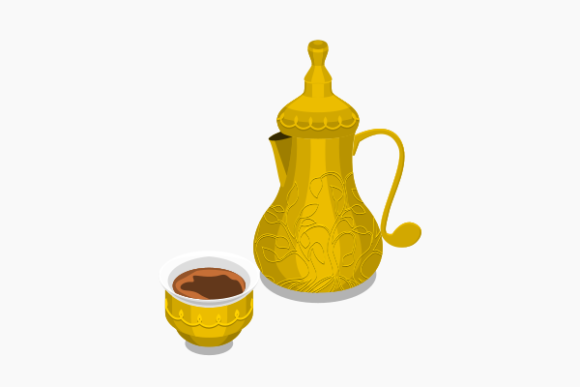
Bulbous Bottom Arab Coffee Pot and Cup: Graphics for Crafts Brands
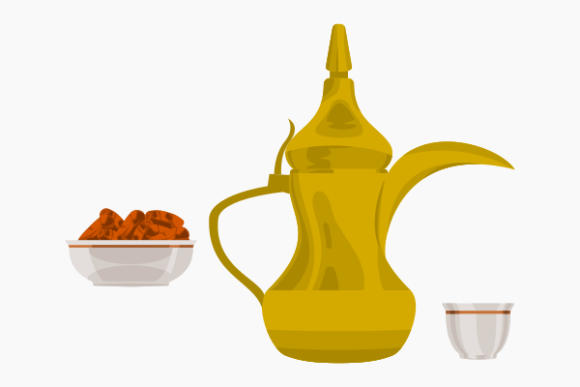
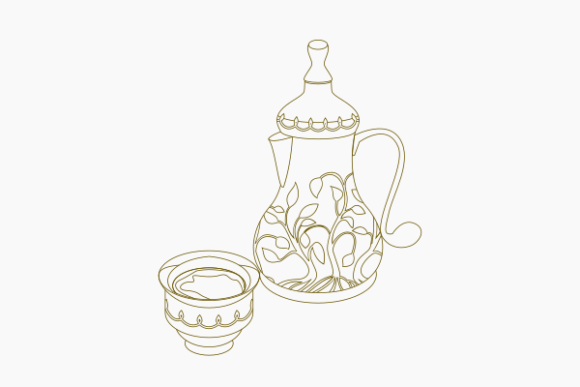
As a brand designer who’s developed visual identities for over 30 local businesses—from artisanal date syrup makers in Dubai to heritage-inspired candle studios in Riyadh—I opened the Bulbous Bottom Arab Coffee Pot and Cup asset expecting charm, but found something more: cultural resonance with immediate commercial utility. This isn’t just clipart—it’s a thoughtfully composed Editable SVG vector of Arabian coffee in patterned bulbous bottom dallah pot and finjan cup illustration, rendered with balanced line weight, intentional negative space, and subtle ornamental rhythm.
First impression? Warm, grounded, and quietly confident. It leans into elegance without stiffness—neither overly ornate nor stripped-down modern. The bulbous form feels generous and hospitable; the hand-drawn patterning suggests craftsmanship, not mass production. For a local business, it signals authenticity and regional pride without leaning on cliché. It reads as premium yet approachable, handmade but precise, and tradition-aware but design-forward. That duality makes it ideal for food brands, boutique skincare lines, handmade soap makers, or seasonal gift collections rooted in Middle Eastern hospitality.
In real-world application, this graphic design asset earns its place across multiple touchpoints. I recently used it for a Jeddah-based date-and-cardamom chocolate brand—integrating the dallah into their product label as a foil-stamped accent, scaling the finjan into a watermark on their thank-you cards, and animating a simplified version for Instagram Reels announcing their Ramadan gifting collection. It worked because the asset supported—not overpowered—their brand identity: clean typography, warm sand-and-amber palette, and tactile uncoated paper stock.
Where does it truly shine? In packaging design where storytelling matters. Use it as a central motif on tea box lids, as a repeating border on handmade soap wraps, or as a hero graphic above café menu boards. It adds instant shelf appeal on crowded retail shelves—especially when paired with matte finishes or embossed textures. For social media managers, it’s a versatile anchor for social media graphics: layer it over flat-lay photos of spices or textiles, convert it to monochrome for Instagram Stories, or isolate the finjan for sticker sheets sold at local markets. As a printable design, it holds up beautifully on hang tags, recipe cards, and limited-edition packaging inserts.
It also strengthens small business branding by reinforcing visual consistency. When applied across business cards, flyers, and website banners, the dallah becomes a quiet signature—like a visual handshake that says, “We know our roots, and we honor them with care.” That consistency builds customer trust, especially among shoppers seeking culturally grounded, locally made goods. For a florist launching a “Arabian Nights” bouquet series—or a children’s product brand designing Eid-themed activity kits—this asset delivers emotional connection without sacrificing polish.
But let’s be practical: this isn’t a universal solution. Avoid using Bulbous Bottom Arab Coffee Pot and Cup in formal corporate branding (think law firms or fintech), on very small labels where fine patterning blurs, or within crowded product packaging layouts where competing icons dilute impact. It shouldn’t sit beside dense ingredient lists or legal disclaimers—it’s decorative, not functional text. Steer clear on low-contrast backgrounds (e.g., light grey on off-white), and reconsider for luxury minimalist brands that rely on extreme restraint. If your brand voice is stark, geometric, or ultra-contemporary, this illustration may feel tonally misaligned.
Here’s what I test before committing it to client work: First, I drop it into a real product mockup—not just a digital preview, but printed on the exact paper stock the client will use. Next, I convert it to grayscale to check legibility in black-and-white applications (essential for stamps, receipts, or monochrome merch). I scale it down to 8mm height to verify clarity on tiny hang tags. Then I layer it beside every font in their brand identity: serif for elegance, sans serif for clarity, script for warmth, handwritten for artisanal tone, display for campaign energy. Does it harmonize—or fight for attention?
I also confirm commercial license status upfront. Many creative marketplaces list assets under “personal use only,” but for local business needs—whether printing on 500 candle jars or embedding in a Canva template for a client’s email campaign—you need verified commercial design rights. I check SVG editability: can I adjust stroke width, recolor individual pattern elements, or isolate the finjan for standalone use? I export PNGs at multiple resolutions and inspect transparency edges—no halos, no jagged lines. And yes, I compare it against competitor packaging. Does it stand out? Does it feel distinctively *ours*, not generic?
This digital product works best when treated as a strategic design asset, not just decoration. It supports professional branding by elevating perceived value—customers equate thoughtful illustration with thoughtful products. For a handmade business launching its first line of rosewater toners or saffron-infused honey, it adds narrative depth without needing words. In editorial design for local food zines or cultural event posters, it anchors visuals with meaning. Even in web design, its SVG nature ensures crisp rendering across devices—no pixelation on mobile menus or hero sections.
Ultimately, Bulbous Bottom Arab Coffee Pot and Cup succeeds because it bridges craft and commerce. It’s rooted in tradition but built for today’s creative entrepreneur: scalable, editable, culturally resonant, and commercially viable. Whether you’re designing for a family-run café in Amman, a home-based spice blend business in Doha, or a pop-up boutique in Abu Dhabi, this asset doesn’t just fill space—it tells part of your story, respectfully and beautifully.